
Everyday someone uses chat gpt to summarize a text or even ask questions about a food recipe. Across the world we have had a surge of Ai use and it won’t be stopping anytime soon. In fact it’s so widely used, there will be children that are born into this new era of Ai. With how much Ai is used we should probably ask ourselves, is it okay for us to constantly use it? Is Ai beneficial for us or harming us instead? When we ask these questions we should look at one group that can be influenced quite easily, children. Children can easily be influenced by anything in their environment, including Ai. As a result, many schools have had to deal with students using mass Ai for cheating. Some students use Ai ethically but is Ai good for students to even use? Does Ai affect how they think when they are just asking for straight up answers? In this essay I wish to answer that question by showing how Ai negatively affects the critical thinking of students.
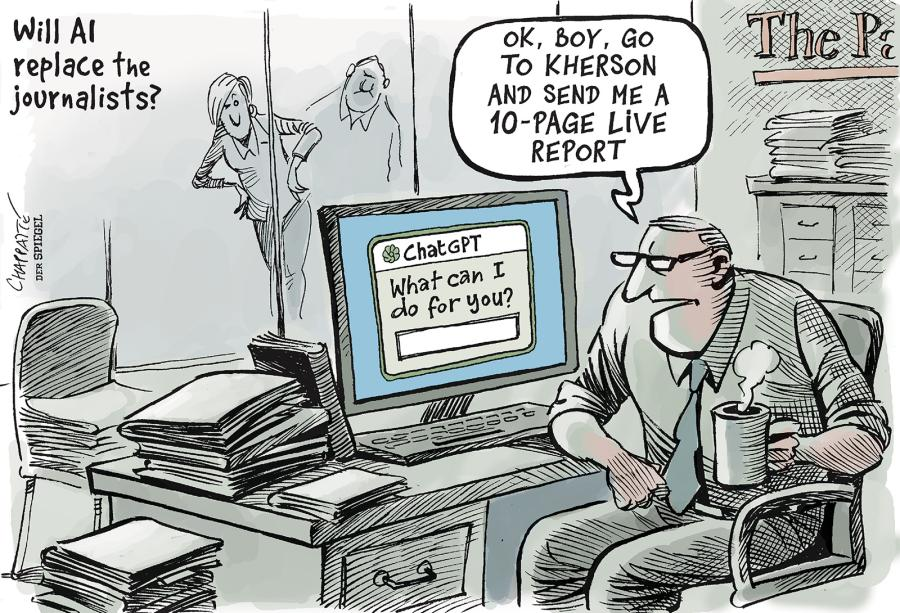
Jing Liu, Ahmad Johari Bin Sihes and Ye Lu wrote a peer reviewed essay, “How do generative artificial intelligence (AI) tools and large language models (LLMs) influence language learners’ critical thinking in EFL education? A systematic review.”, in which they claim that Artificial Intelligence hinders the critical thinking of students in learning English as a foreign language. These authors support this claim by conducting a study and gathering other related journals to see whether artificial intelligence hinders or nurtures critical thinking of students in this subject. The authors before their research study identify ways in which artificial intelligence hinders students’ critical thinking. “Over-reliance on generative AI and LLMs can reduce independent thinking and problem-solving skills (Hading et al., 2024). Additionally, AI-generated content may sometimes contain errors and biases, so EFL learners need to critically evaluate the information they receive (Datskiv et al., 2024).” (Jing Liu, Ahmad Johari Bin Sihes and Ye Lu) The authors show how before the research how artificial intelligence can affect critical thinking of students, one being over-reliance. If the student uses it too much they might not be able to learn for themselves which takes us to what they said after they conducted their research. “Rizkiani et al. (2024) found that although AI-generative tools significantly improved EFL students’ abilities to create cohesive arguments, fix language, and incorporate evidence, overreliance on generative AI may impede the development of autonomous analytical skills and CT skills.” (Jing Liu, Ahmad Johari Bin Sihes and Ye Lu) These authors found five studies that cautioned the use of artificial intelligence where they all warned about over-reliance. Where if students overused artificial intelligence they could lose their own creativity and just fully rely on the article intelligence, uninterested in the subject.
Katarzyna Szmyd and Ewelina Mitera wrote a scholarly research studies journal, “The Impact of Artificial Intelligence on the Development of Critical Thinking Skills in Students”, where they suggest that artificial intelligence can weaken critical thinking in students. These authors support this by conducting a survey with students to explore their use of artificial intelligence and how they feel about how it affects them. First they ask students if artificial intelligence increases their motivation to learn and this is what they found. “”I have no opinion” (40%) and “I am not motivated at all” ” (38.9%). The above chart therefore illustrates that in the eyes of the vast majority of people surveyed (nearly 79%) the level of motivation to learn does not increase when using AI solutions.” (Page 8, Katarzyna Szmyd and Ewelina Mitera) They found that artificial intelligence doesn’t motivate 79% of students which is harmful because they are just using artificial intelligence to just do the work which invariably can ruin the creativity of students. Then they continued the survey to ask another question, do you think that artificial intelligence weakens your ability to think independently, or known as your critical thinking. “”Do you fear that excessive reliance on AI could weaken your ability to think independently?” The responses provided (Figure 8) clearly indicate that such reliance could indeed lead to this outcome, and to a significant extent (83.2% of respondents selected this option).” (Page 12, Katarzyna Szmyd and Ewelina Mitera) This fear shows the reality of what artificial intelligence is doing to students’ critical thinking, not allowing them to use their own creativity due to over-reliance. We even see this in a table of the summary of statements that the interviewers provided for the students to either disagree or agree. Two statements stand out, “AI influences my critical thinking abilities” and “AI helps me be more independent in solving problems”. (Page 12-13, Katarzyna Szmyd and Ewelina Mitera) In all three statements majority of students disagree with both statements rather than agree. Overall students show how they think that AI influences their critical thinking skills and their motivation to work.
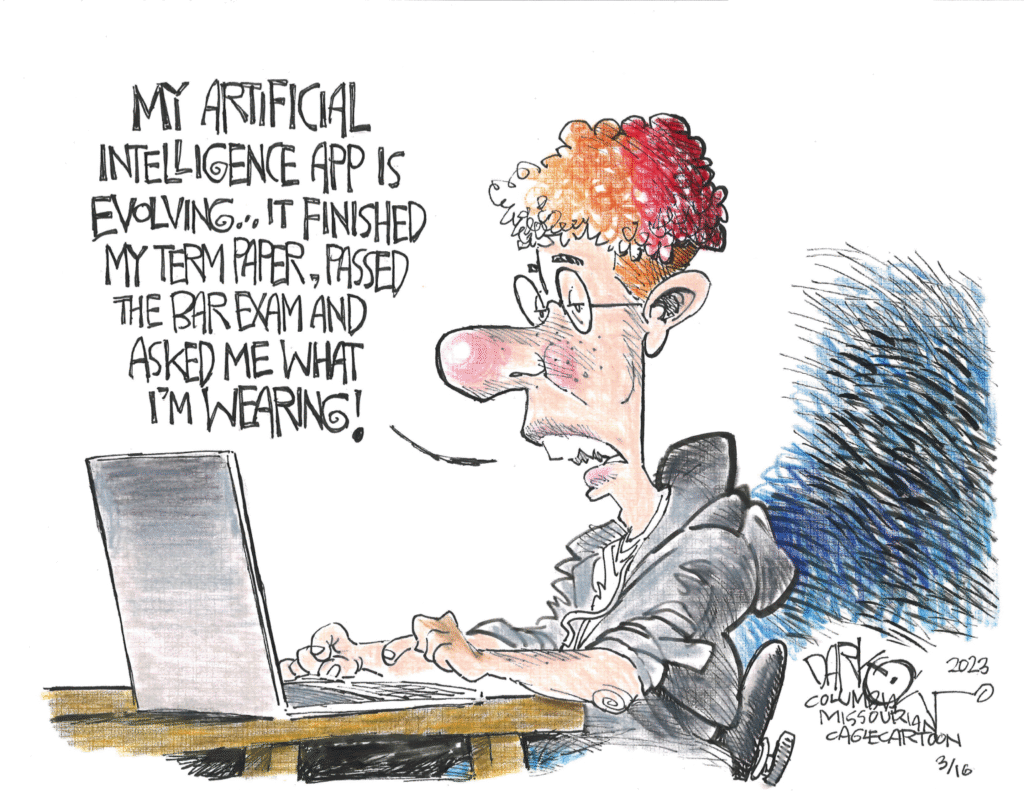
Jenny Anderson and Rebecca Winthrop wrote a New York Times article, “Parents, Your Job Has Changed in the A.I. Era”, in which they state that parents now have to be wary about their children using AI technology. They support this statement by listing the negative effects of AI on students’ cognitive and critical thinking. These authors state that parents are in the dark about Ai and their children’s use of it. “Researchers found that 22 to 26 percent of parents of students in secondary school believe that their children use generative A.I. for education-related purposes, yet other studies suggest the use among secondary school students may be closer to 70 percent.” (Jenny Anderson and Rebecca Winthrop) Parents need to be engaged with their children on the use of Ai because of the negative effects it can have on their brain. These authors talk about how when students use AI they aren’t learning anything, just getting the perfect work from chatgpt, which is very harmful to their ability to think. They support this further by saying that students need to fail and struggle to be able to learn and if AI just spits out a perfect answer, they aren’t learning. These authors pulled a study from M.I.T researchers where the researchers reviewed the work of university students where one group wrote with chatgpt, the second group wrote their own but could use google, and the last group didn’t use any tools, this is what they found. “Those who wrote with ChatGPT from the beginning exhibited the worst writing quality and motivation; and as shown from brain activity measurements, parts of their brain associated with learning were less active. They struggled to revise their writing because it was never theirs to begin with. Participants who drafted their work unaided performed best.” (Jenny Anderson and Rebecca Winthrop) This shows the AI in action and how it really shows how students are affected by just getting work spit out perfectly. Students will struggle to analyze and revise writing that isn’t theirs because they didn’t learn to write it. Parents need to be a part of their children’ s lives when it comes to the use of AI so they can ensure that their children gain the proper cognitive and critical thinking so they don’t struggle in the future with independent thinking.
All these sources connect together and connect to my question I’m trying to answer, does Ai affect how students think when they are just asking for straight up answers? First we have Jing Liu, Ahmad Johari Bin Sihes and Ye Lu, with their writing of “How do generative artificial intelligence (AI) tools and large language models (LLMs) influence language learners’ critical thinking in EFL education? A systematic review.” Then we have Katarzyna Szmyd and Ewelina Mitera with their writing, “The Impact of Artificial Intelligence on the Development of Critical Thinking Skills in Students.” These two works connect with one another and support each other very well. In this first essay, Jing Liu, Ahmad Johari Bin Sihes and Ye Lu write about how AI affects how students learn English as a foreign language and how sources that they found warned of the use of over-reliance on AI as it can hinder critical thinking. This directly connects to the scholarly article written by Katarzyna Szmyd and Ewelina Mitera where they surveyed students and asked them about their feelings of AI. They asked them questions like if they think AI ruins motivation and if they fear AI weakens their independent thinking. The majority of students said that AI doesn’t give them motivation, weakens their independent thinking, negatively influences their critical thinking abilities, and doesn’t help them be more independent in solving problems. This connects to the first essay as a survey shows how students feel that over-reliance on AI worsens their critical thinking as warned by sources researched from the first essay. Then these two sources connect to the NY Times article, written by Jenny Anderson and Rebecca Winthrop, “Parents, Your Job Has Changed in the A.I. Era”. In this article the authors warn parents of the use of AI, showing an MIT study where students that used chatgpt for their writing and it showed that they had the hardest time revising the work. This shows that the perfect work that chatgpt gives does not help students learn and hurts them in developing their cognitive and critical thinking skills. This connects to both the first essay and the scholarly article as we can see a study from MIT that shows the negative effects of AI on the perfect work, they don’t learn and overall it weakens their critical thinking. The two photos in this paper both show how easy it is to use AI to just get the perfect answer without learning anything as well. AI in the political cartoons replace human work showing how they aren’t learning but just copying. Overall AI negatively impacts students in thinking critically by not allowing them to learn due to the over-reliance of AI, students must struggle and fail again to properly learn.
Works cited
Liu, Jing, et al. “How do generative artificial intelligence (AI) tools and large language models (LLMs) influence language learners’ critical thinking in EFL education? A systematic review.” Smart Learning Environments, vol. 12, no. 1, Dec. 2025. Gale Academic OneFile, dx.doi.org.ccny-proxy1.libr.ccny.cuny.edu/10.1186/s40561-025-00406-0. Accessed 26 Oct. 2025.
Szmyd, Katarzyna, and Ewelina Mitera. “The impact of artificial intelligence on the development of critical thinking skills in students.” European Research Studies Journal 27.2 (2024): 1022-1039. Accessed 26 Oct. 2025.
Anderson, Jenny, and Rebecca Winthrop. “Opinion | Parents, Your Job in Children’s Learning Has Changed in the A.I. Era – The New York Times.” Parents, Your Job Has Changed in the A.I. Era, New York Times, 11 Sept. 2025, www.nytimes.com/2025/09/11/opinion/parents-children-ai-learning.html. Accessed 26 Oct. 2025.
“Will AI replace the journalists.” 3 Mar. 2023, Chappatte globecartoon, https://chappatte.com/en/images/will-ai-replace-journalists, Accessed 26 Oct. 2025.
John Darkow, “Evolving AI”, 15 Mar. 2023, Political Cartoons, https://politicalcartoons.com/cartoon/272735, Accessed 26 Oct. 2025.

